 Roomcraft
Roomcraft lane
Quiet Queue
Quiet Queue is a Roomcraft learning area for teachers building low-interruption systems for help, focus, and independent next steps without asking a room to become silent all day.
For: Teachers building low-interruption systems for help, focus, and independent next steps without asking a room to become silent all day. · Tool: Focus systems studio
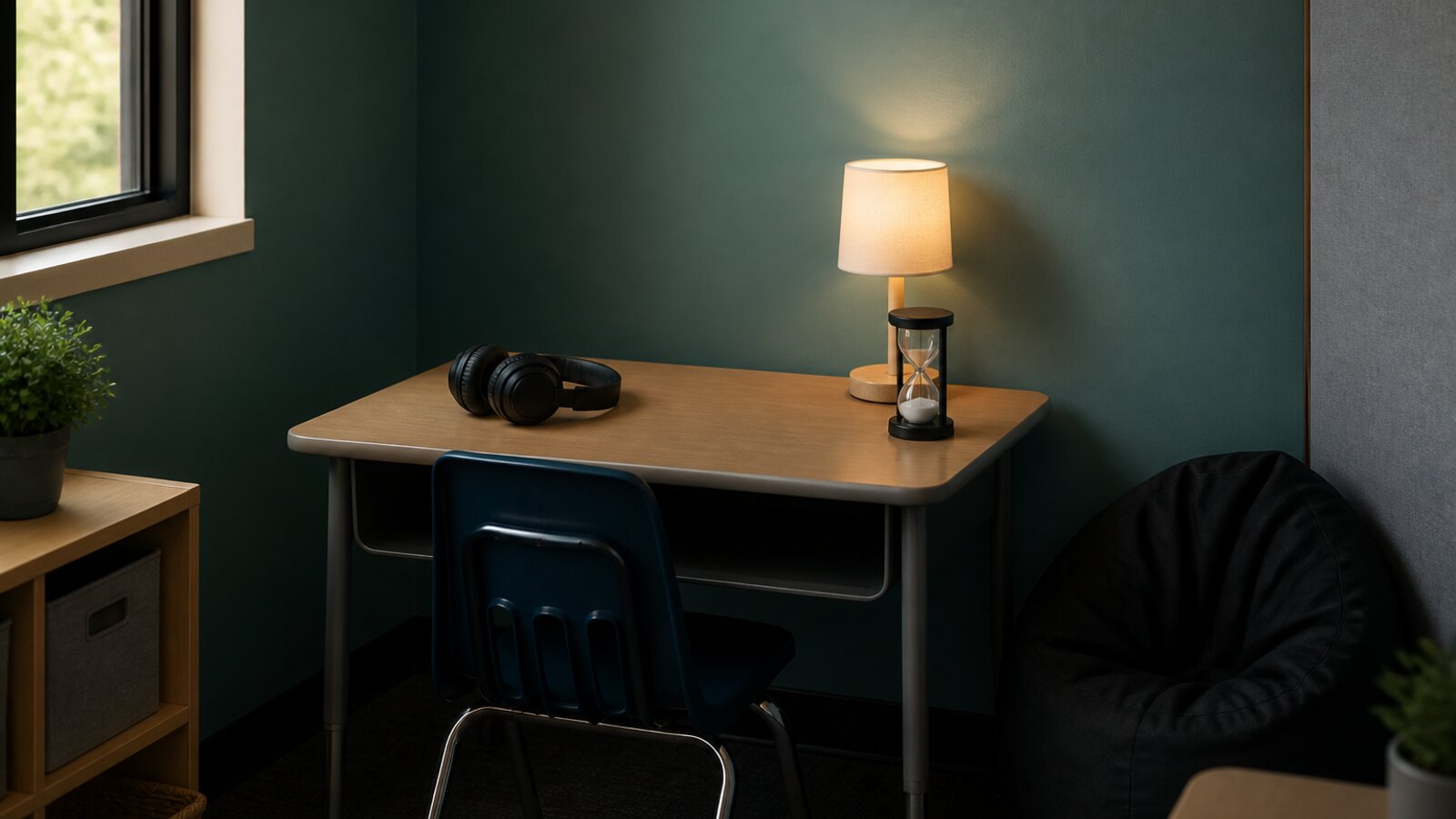
Quiet Queue designs low-interruption help and focus systems: silent signals, wait lists, and independent next steps that spare the whole room from constant adult call-outs. Guides treat attention as a shared resource that students and teachers spend together. Learners practice how to request help, keep working, and read the room’s focus cues without needing absolute silence as the only definition of a successful work block.
Each Quiet Queue guide starts from a familiar interruption pattern—hand forests, “I’m stuck” loops at your elbow, or focus that collapses whenever one student needs support. You will build signal systems, clarify what students do while waiting, and practice adult responses that stay brief and fair. The craft is humane: access to help without turning every stuck moment into a public broadcast.
Use Quiet Queue when independent work time keeps dissolving into noise, desk line-ups, or a chorus of names calling for help. Install one signal and one “while you wait” task, then observe whether more students stay with their work between check-ins. A calm help system the class can explain beats a shushing campaign that never teaches what to do next when stuck.
How to use this lane
Pick the Quiet Queue guide that matches your interruption type: help requests, materials needs, bathroom logistics, or focus resets after a loud stretch. Teach one visible or silent signal, post what students should try before asking, and prepare a short wait-work option that still serves the lesson. Keep the first version simple enough that you can honor the queue without inventing new rules mid-period.
Practice the system during a real work block, not as a poster nobody uses. Model the signal, demonstrate waiting productively, and show how you will check the queue in order so fairness is visible. Invite students to notice when the system helps them stay focused and when it still fails—their feedback often reveals missing tools or unclear “try three things first” steps.
After several days, decide whether to keep, simplify, or re-teach one piece of the signal system. Note how long waits lasted, whether help felt fair across the room, and who still got skipped. Over time, Quiet Queue becomes a classroom focus language: shared signals, honest next steps, and adult attention that reaches more learners without asking the whole room to freeze.
Focus timer + work queue
Queue next steps and run a focus block without refreshing the page.
12:00
Guides
Long-form classroom craft for Quiet Queue.
- Silent Signal Systems That Students Remember A practical classroom-craft guide to silent signal systems that students remember, with usable language, small rehearsal moves, and evidence-based revisions. Build the routine around the learners and time you actually have.
- Build a Work Queue Students Can Trust A practical classroom-craft guide to build a work queue students can trust, with usable language, small rehearsal moves, and evidence-based revisions. Build the routine around the learners and time you actually have.
- Focus Block Design for Sustained Work A practical classroom-craft guide to focus block design for sustained work, with usable language, small rehearsal moves, and evidence-based revisions. Build the routine around the learners and time you actually have.
- Noise-Floor Agreements That Name the Work A practical classroom-craft guide to noise-floor agreements that name the work, with usable language, small rehearsal moves, and evidence-based revisions. Build the routine around the learners and time you actually have.
- Independent Next Steps Before “What Do I Do?” A practical classroom-craft guide to independent next steps before “what do i do?”, with usable language, small rehearsal moves, and evidence-based revisions. Build the routine around the learners and time you actually have.