 Roomcraft
Roomcraft lane
Lab Cart
Lab Cart is a Roomcraft learning area for teachers running hands-on learning with predictable materials, visible safety cues, and cleanup plans that preserve the next lesson.
For: Teachers running hands-on learning with predictable materials, visible safety cues, and cleanup plans that preserve the next lesson. · Tool: Hands-on learning planner
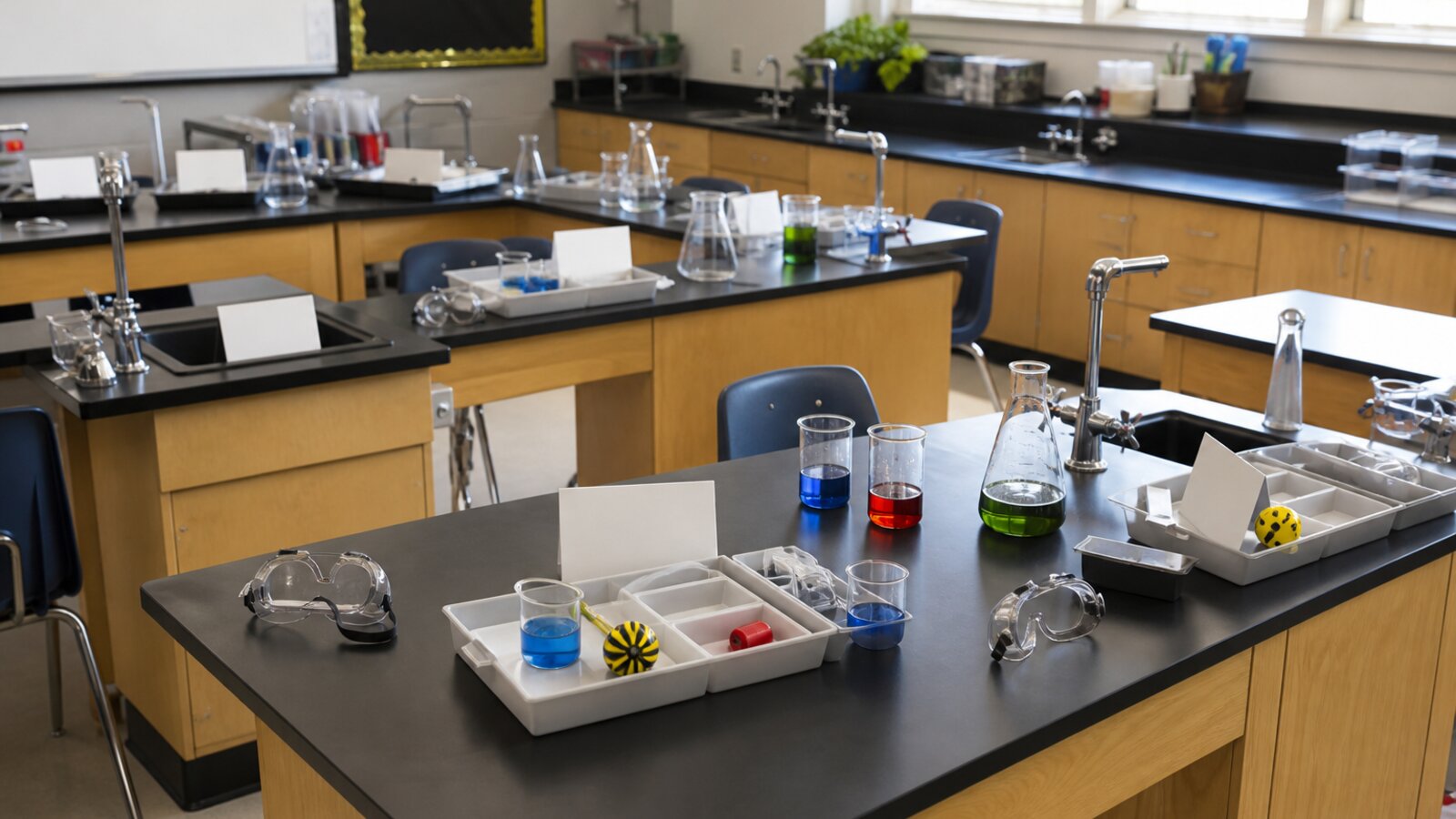
Lab Cart is for station and hands-on days when materials, safety, and cleanup decide whether learning happens or chaos does. Guides help teachers stage carts and stations so students know what to touch, in what order, and how to leave the space ready for the next class walking in. Predictable materials choreography is instructional craft, not busywork bolted onto a good idea.
Each Lab Cart guide begins with a station problem teachers recognize: missing pieces, unclear roles, unsafe shortcuts, or cleanup that steals the last ten minutes every time. You will plan material sets, visible cues, and student jobs that keep inquiry moving without constant adult hunting for scissors. The work respects science, art, maker, and other hands-on rooms that share the same logistics pressure.
Reach for Lab Cart when a promising activity keeps failing on setup or teardown rather than on the thinking itself. Try one station layout, rehearse the material path once with a small group, and watch where bottlenecks form. A simple station students can run and reset is more valuable than an ambitious lab that only works when every adult in the building is free to help.
How to use this lane
Choose the Lab Cart guide nearest your station headache—supply shortages, unclear directions at the cart, or cleanup that never finishes before the bell. Build one complete materials set for a single station, label it so a student can restock it, and write the safety cue in the place hands actually go. Keep the first run smaller than your dream lab day so you can see the system.
Teach the station flow as content: where to get materials, what “done” looks like at the table, and how to reset without a scavenger hunt across three counters. Model once, let a group practice the path, then open the full class. Circulate for thinking and safety, not for constantly hunting missing tools that should already have a home on the cart.
After the period, check what ran out, what wandered to another table, and which cue students ignored when they were rushing. Adjust labels or quantities before the memory fades, and note one role students can own next time with clearer authority. Over weeks, Lab Cart becomes a reliable hands-on system: staged materials, visible safety, and cleanup that protects tomorrow’s lesson instead of punishing it.
Station rotation scheduler
Name stations, set minutes, and run a live rotation timer.
08:00
Station: —
Guides
Long-form classroom craft for Lab Cart.
- Station Rotation Timing That Protects Learning A practical classroom-craft guide to station rotation timing that protects learning, with usable language, small rehearsal moves, and evidence-based revisions. Build the routine around the learners and time you actually have.
- Materials Lists That Travel Well A practical classroom-craft guide to materials lists that travel well, with usable language, small rehearsal moves, and evidence-based revisions. Build the routine around the learners and time you actually have.
- Safety Cues Students Can See and Use A practical classroom-craft guide to safety cues students can see and use, with usable language, small rehearsal moves, and evidence-based revisions. Build the routine around the learners and time you actually have.
- One-Period Labs With a Complete Arc A practical classroom-craft guide to one-period labs with a complete arc, with usable language, small rehearsal moves, and evidence-based revisions. Build the routine around the learners and time you actually have.
- Cleanup Protocols That Save Tomorrow A practical classroom-craft guide to cleanup protocols that save tomorrow, with usable language, small rehearsal moves, and evidence-based revisions. Build the routine around the learners and time you actually have.