 Roomcraft
Roomcraft lane
Parentdesk
Parentdesk is a Roomcraft learning area for teachers planning respectful family communication with clearer questions, concrete records, and follow-through that does not multiply busywork.
For: Teachers planning respectful family communication with clearer questions, concrete records, and follow-through that does not multiply busywork. · Tool: Family communication desk
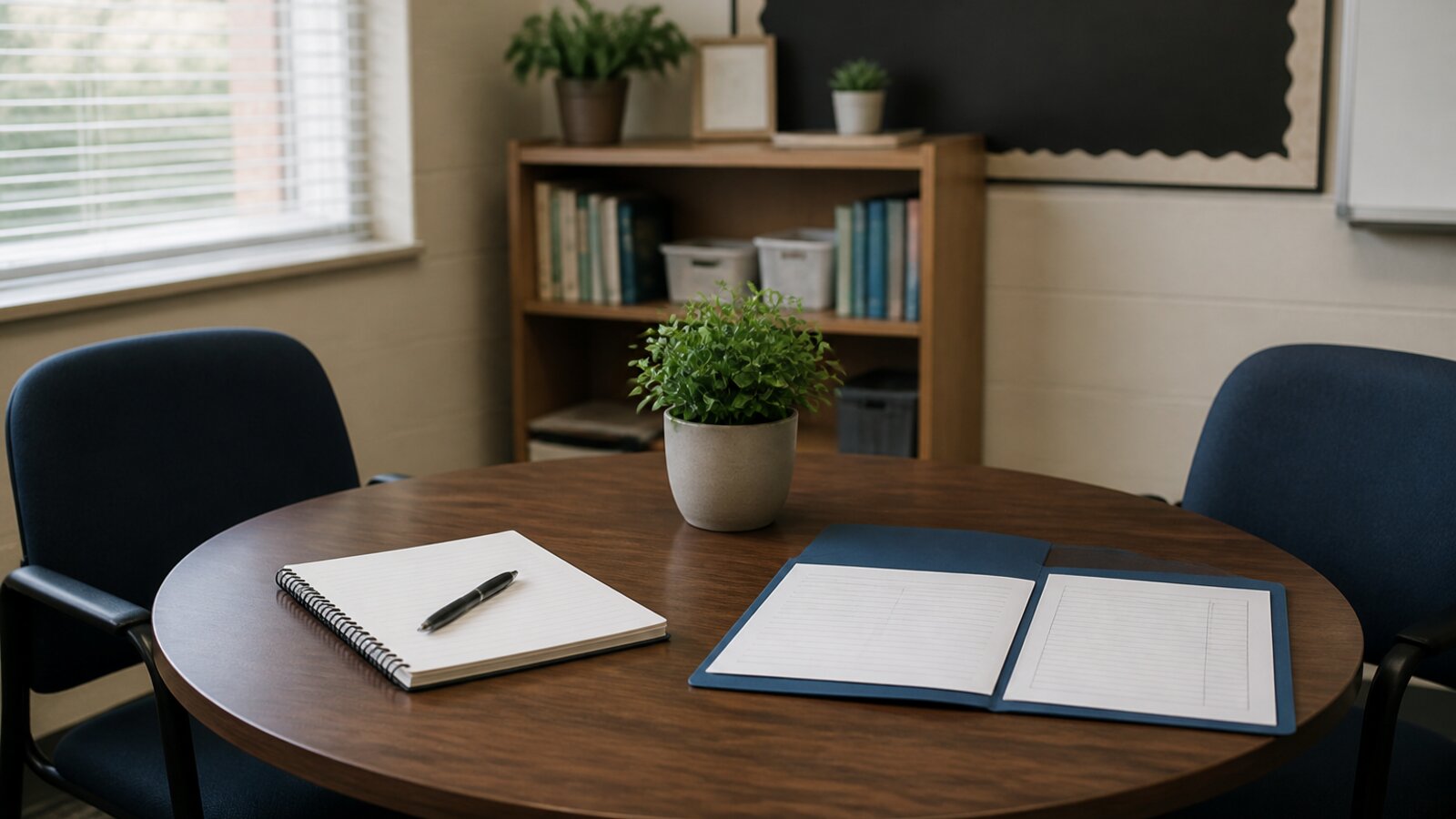
Parentdesk centers family conferences and ongoing caregiver communication as careful craft: clearer questions, concrete student evidence, and follow-through that respects everyone’s limited time. Guides help teachers prepare conversations that name strengths and next steps without drowning families in jargon or turning the meeting into a one-way report. Respect shows up in preparation, in listening, and in the promises you choose to make.
Each Parentdesk guide starts from a real conference friction—thin notes, surprise grades, language access needs, or meetings that run out of minutes before the student’s voice appears. You will practice gathering evidence, framing questions, and leaving with one agreed next action that both school and home can attempt. The aim is partnership that can continue after the handshake, not a performance of concern.
Use Parentdesk when conference season approaches or when a difficult conversation needs more structure than a hallway chat between bells. Choose one preparation habit, gather a few specific examples, and decide what you hope the family leaves knowing and able to try. A shorter meeting with shared clarity beats a long monologue that produces no workable plan for home or school.
How to use this lane
Open the Parentdesk guide that matches the conversation ahead: progress conference, concern meeting, language-supported talk, or a follow-up after a hard week. Gather two or three concrete work samples or observation notes, write the opening sentence you will use, and list one question you truly want answered. Protect time on the agenda for the family’s perspective before you fill every minute with school talk.
During the meeting, lead with evidence and invitation rather than a parade of scores. Name what the student does well, show one specific growth edge, and ask what caregivers are noticing at home. Keep language plain, check understanding, and write the agreed next step before anyone stands up. Students, when present, should hear themselves described as capable people with work still in progress.
Afterward, send only the follow-through you promised—no bloated summary that creates new guilt or a second job for the family. Note what question unlocked the conversation and what evidence you wished you had brought to the table. Over time, Parentdesk becomes a calm desk practice: prepared notes, humane questions, and conference habits that build trust instead of paperwork theater.
Conference question builder
Build questions and a follow-up outline for conferences. Browser storage only.
Guides
Long-form classroom craft for Parentdesk.
- Conference Question Banks That Invite Partnership A practical classroom-craft guide to conference question banks that invite partnership, with usable language, small rehearsal moves, and evidence-based revisions. Build the routine around the learners and time you actually have.
- Concern Triage Before You Send the Message A practical classroom-craft guide to concern triage before you send the message, with usable language, small rehearsal moves, and evidence-based revisions. Build the routine around the learners and time you actually have.
- Progress Journals That Make Growth Visible A practical classroom-craft guide to progress journals that make growth visible, with usable language, small rehearsal moves, and evidence-based revisions. Build the routine around the learners and time you actually have.
- Follow-Up Plans Families Can Understand A practical classroom-craft guide to follow-up plans families can understand, with usable language, small rehearsal moves, and evidence-based revisions. Build the routine around the learners and time you actually have.
- Teacher-Parent Scripts for Clear, Respectful Starts A practical classroom-craft guide to teacher-parent scripts for clear, respectful starts, with usable language, small rehearsal moves, and evidence-based revisions. Build the routine around the learners and time you actually have.