 Roomcraft
Roomcraft lane
Bellbench
Bellbench is a Roomcraft learning area for teachers who want the first minutes, transitions, and work time to feel teachable rather than improvised.
For: Teachers who want the first minutes, transitions, and work time to feel teachable rather than improvised. · Tool: Routine studio
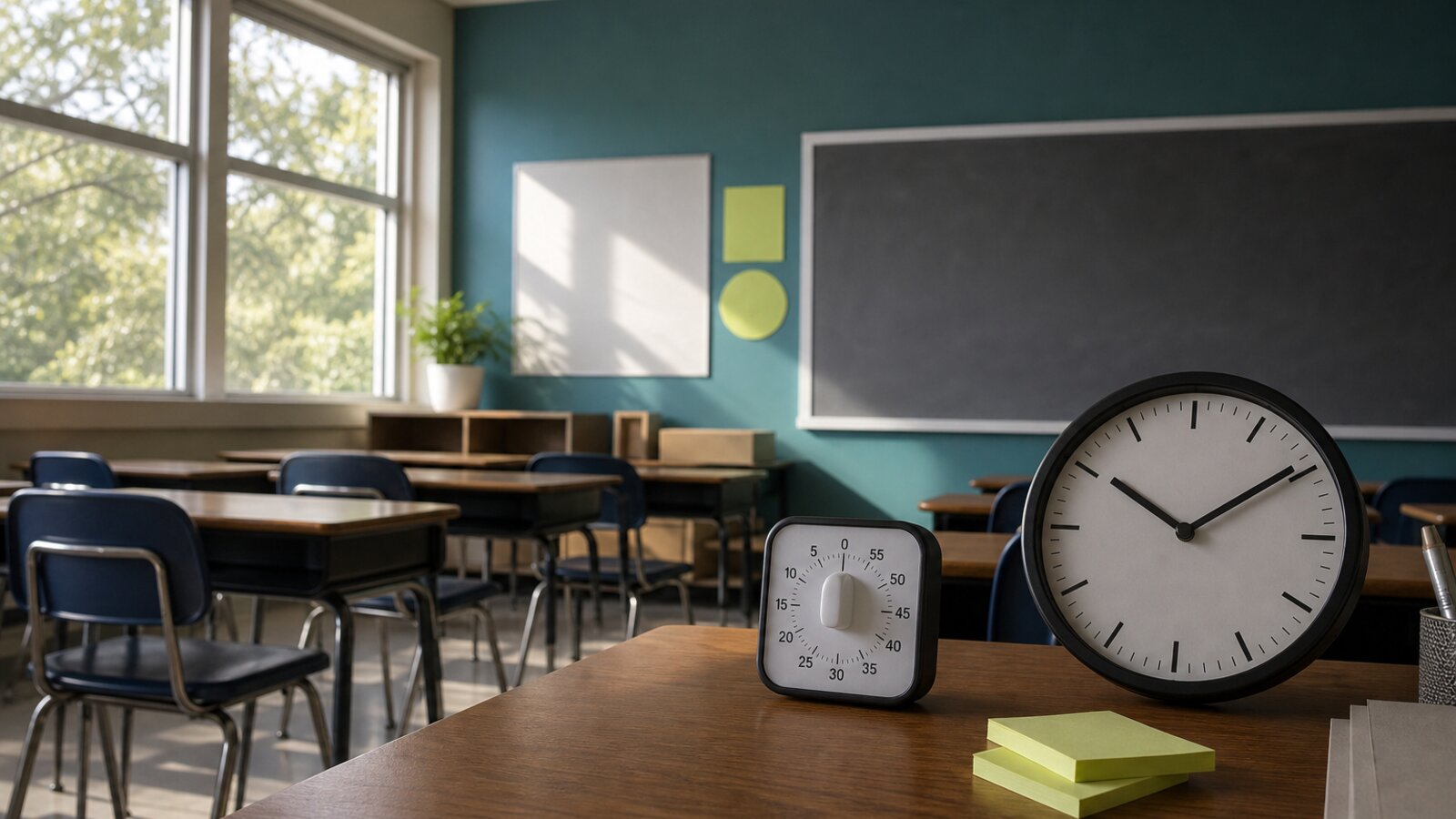
Bellbench treats classroom routines as design work: small choices about language, materials, timing, and participation that can be examined and improved. Its guides focus on repeatable moves for openings, transitions, and work-time cues, not rigid formulas. Educators and learners can adapt each structure to the people and schedule in front of them while keeping the purpose of the moment visible and teachable.
Each Bellbench guide begins with a concrete classroom moment and follows it through preparation, practice, observation, and revision. The aim is to make useful instructional craft visible so a class can name what good looks like. Readers can borrow a starting structure, then adjust it with evidence from their own room rather than chasing a one-size-fits-all method that ignores local constraints.
Use Bellbench when a familiar part of the day feels harder than it needs to be—the first minutes, a messy transition, or work time that never quite settles. Choose one guide, test its smallest version, and make notes about what learners understood. A modest routine that the class can explain and sustain is more valuable than an elaborate plan that only works on ideal days.
How to use this lane
Begin by selecting the Bellbench guide closest to the friction you can actually describe in plain language. Read the opening section, identify the desired learner action, and prepare a single cue or artifact that makes the next step obvious without a long speech. Keep the first trial short enough to observe carefully instead of merely hoping the room will somehow know what to do.
Teach the routine as content worth practicing together. Model the language, let learners practice with a low-stakes task, and pause for a quick explanation of what they noticed about timing, materials, or peer help. This makes Bellbench a shared classroom tool rather than an adult-only management system, and it creates honest opportunities for students to suggest useful refinements that stick.
After use, collect only the evidence needed for one decision: keep, simplify, clarify, or try again tomorrow with a smaller move. Write down the adjustment before the next class while the moment is still fresh in mind. Over time, Bellbench becomes a durable record of local classroom craft, built from real attempts and respectful attention to how people learn together.
Period routine builder
Draft first-five, work block, and last-five cues. Saved in this browser only.
05:00
Guides
Long-form classroom craft for Bellbench.
- First Five Openers A practical classroom-craft guide to first five openers, with usable language, small rehearsal moves, and evidence-based revisions. Build the routine around the learners and time you actually have.
- Transition Language That Moves a Room A practical classroom-craft guide to transition language that moves a room, with usable language, small rehearsal moves, and evidence-based revisions. Build the routine around the learners and time you actually have.
- Timer Discipline Without Timer Dependence A practical classroom-craft guide to timer discipline without timer dependence, with usable language, small rehearsal moves, and evidence-based revisions. Build the routine around the learners and time you actually have.
- Independent Work Menus That Prevent Drift A practical classroom-craft guide to independent work menus that prevent drift, with usable language, small rehearsal moves, and evidence-based revisions. Build the routine around the learners and time you actually have.
- Recovery When Routines Break A practical classroom-craft guide to recovery when routines break, with usable language, small rehearsal moves, and evidence-based revisions. Build the routine around the learners and time you actually have.